Course Information
Basic information
Term: Fall 2025
Date/Time: Tuesdays, 11:45-1:25 and Thursdays 2:50-4:30
Location: Ryder Hall 153
Credits: 4 semester-hours
Instructor Contact
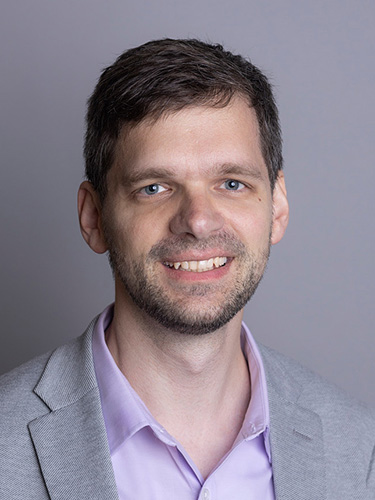
Name: Asst. Prof. Peter Schindler (you can call me Prof. Peter, Professor, or Dr. Peter)
Email: p.schindler (at) northeastern.edu
Office Location: 275 SN
Office Hours: Thursdays, 4:30 pm.
Prerequisites
There are no formal prerequisites for this course. However, an undergraduate level understanding of materials science and basic coding skills in Python can be beneficial. Python will be introduced during the first two weeks through an intensive crash course. In addition, core atomistic and materials science concepts will be (re)introduced by week 4.
No prior experience in machine learning (ML) is required.
Course Format
The course will begin with lectures and interactive Python demonstrations during the first two-thirds of the semester, followed by student-led presentations of recent papers, guest lectures by experts, and final project presentations in the final third of the semester. Code, slides, and homework assignments will be shared on GitHub. One group project, one individual project, and a recent paper presentation will ensure that students learn state-of-the-art materials informatics skills and can conduct research independently in this new domain. The results obtained in the group project are targeted to be published in a peer-reviewed journal.
Who is this for?
This course may be of interest to students of various backgrounds, for example, for students with a background in
- engineering/materials/chemistry/physics who have little coding experience but want to learn about how they can use ML in materials science & chemistry.
- computer science (i.e., experienced with coding) but little to no background in materials who want to learn about how machine ML can be applied in materials science & chemistry.
- experimental research in the lab with little coding experience, who want to learn how they can use Python to complement their experimental work.
Resources
Materials Informatics is a new and rapidly evolving field and hence, conventional textbooks are often not an ideal place to start. This course will not follow a specific textbook but will rely on prior efforts of various aspects of this field (ML, Python, data science, materials science, etc.) and free online resources:
- Machine Learning in Materials Science, Keith T. Butler, Felipe Oviedo and Pieremanuele Canepa, ACS (2022). Link (free with NEU login)
- Machine Learning Refined, Jeremy Watt, Reza Borhani, and Aggelos K. Katsaggelos, 2nd Edition (2024). Link (free)
- Understanding Deep Learning, Simon J.D. Prince, The MIT Press (2023). Link (free)
- Deep Learning for Molecules and Materials, Andrew D. White, Living Journal of Computational Molecular Science (2021). Link (free)
Further detailed resources and readings on Python and ML will be shared alongside the course material.
Learning Outcomes
By the end of this course, students will be able to:
- Explain the fundamentals of ML and its relevance to materials science.
- Analyze and manipulate materials datasets using Python tools such as Numpy, Pandas, and Matplotlib.
- Use Pymatgen to analyze and manipulate crystal structures.
- Access and use APIs like the Materials Project for data retrieval.
- Identify and categorize common data types in materials science from both experimental and computational sources.
- Perform featurization of materials data for use in ML models.
- Interpret the output of ML models in the context of materials discovery and design.
- Train ML models with packages like scikit-learn and PyTorch.
- Design and implement research projects applying ML to real-world materials problems.
- Explore the application of deep learning, machine learning interatomic potentials, and generative AI in materials science.
- Build foundational Python programming skills, including object-oriented programming.
- Use GitHub and VSCode for version control, collaboration, and project development.